SAM - Sustained Autonomous Meals
Highlights: By rethinking how meals are prepped and served inside a constrained, deployable system, SAM was able to scale from roughly 80 meals per hour of other GoodBytz systems to a peak operation mode of 130 meals per hour. This is a direct result of my alignment between U.S. military-style deployment expectations and the capabilities of our engineering team.
SAM is the world’s first portable autonomous food robot. By fitting inside of a standard 20ft ISO shipping container, SAM can be integrated into existing logistics, bringing cooked-to-order meals to people no matter the location.
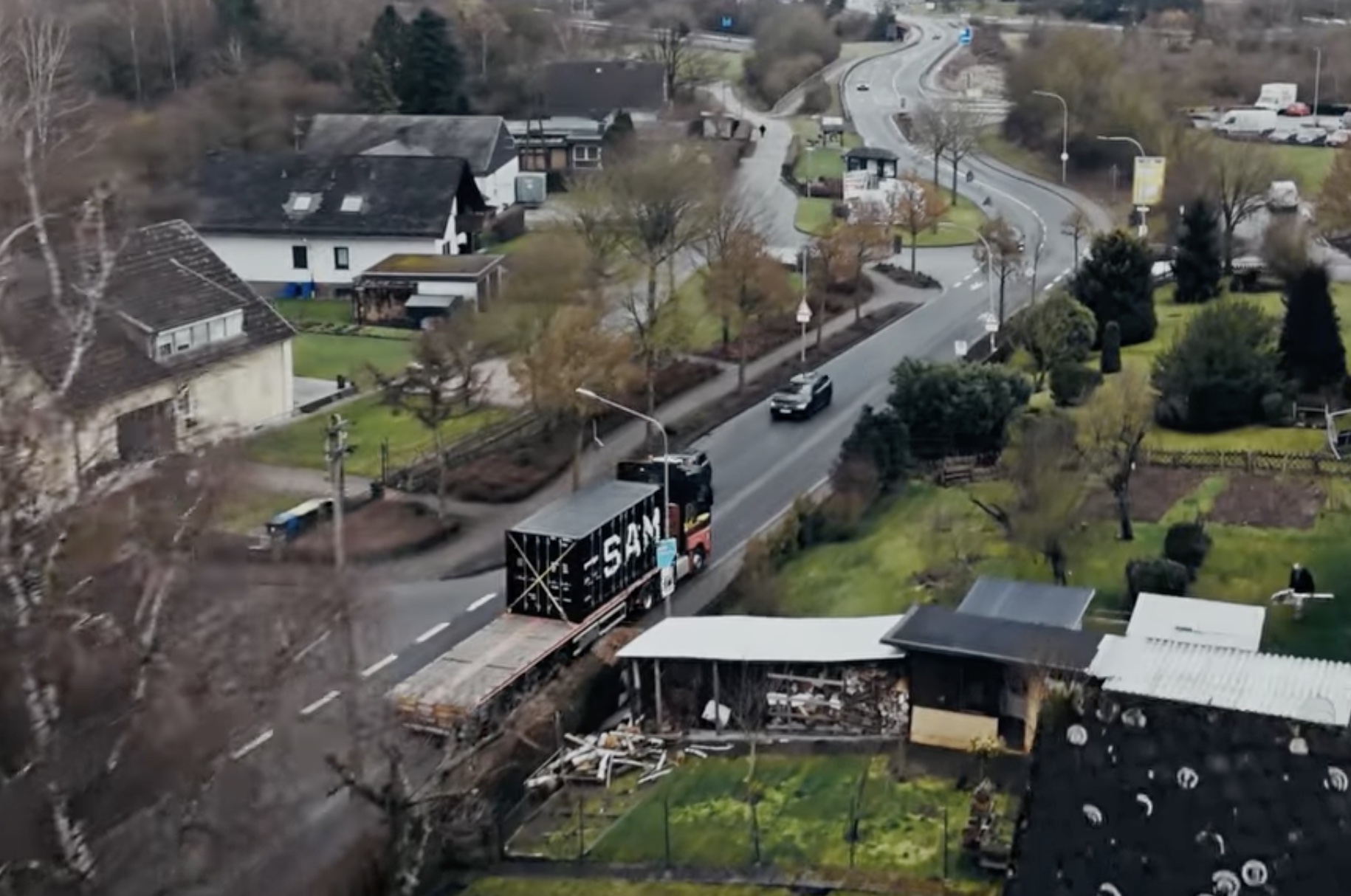
I was the lead designer of SAM and was involved with the project from the very beginning, from the initial concept to the final design and implementation. It was an incredible experience to work on such a groundbreaking project and to see it come to life.
Here I will share what I did on the project, using publicly available information.
Info About SAM
The video is available on YouTube.
(The video is a bit too Bourne Identity-y, but it’s publicly available, so I can share it here!)
More information can be found in the goodBytz press release here.
My Role in SAM
During the project I wore many hats — from leading the design to debugging code to getting coffee for my coworkers. Here I want to highlight three of the most important roles:
- Strategic Designer — defining and scoping the goals of SAM for goodBytz and our clients
- Design Team Lead — leading the small but mighty 3-person design team
- Individual Contributor — hands-on contributions across product and operations
As Strategic Designer
At the earliest stage of the project, my role was to navigate the strategic layer of SAM’s design: what kind of food robot our client needed, and how closely our engineering team — within real timeline and technical constraints — could achieve that vision.
I ran multiple sessions with stakeholders from product, sales, and engineering to scope the ambitions for SAM, maintaining a focus on deployability (rather than just portability) while preserving goodBytz’s core strength: made-to-order cooking.
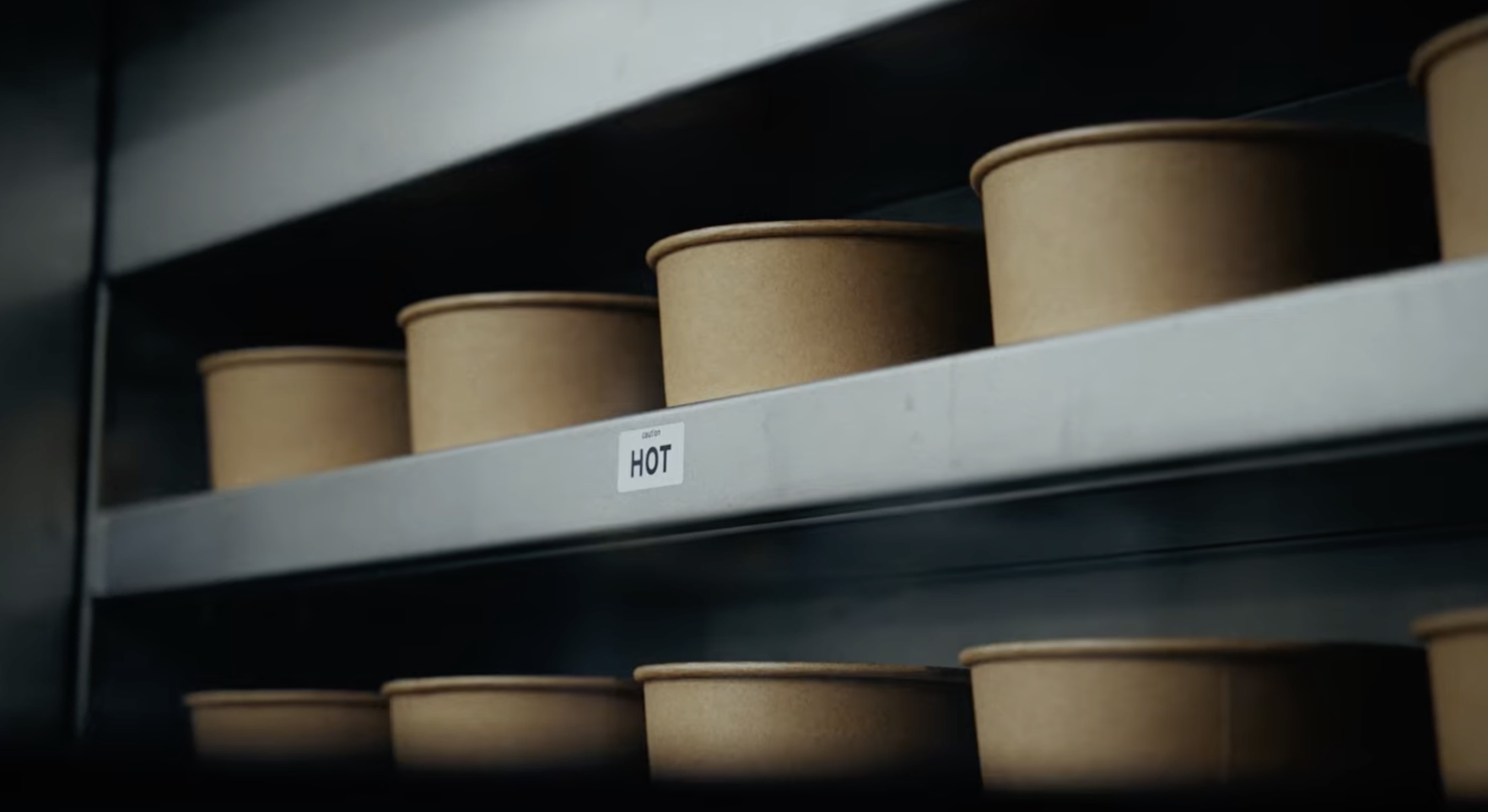
I am particularly proud of developing the concept of pre-producing up to 30 meals in advance of peak ordering periods. Rather than repeating a single dish, this involved preparing a balanced mix of menu items ahead of anticipated demand, allowing SAM to serve meals rapidly while still maintaining quality and variety.
This approach:
- Increased serving throughput during peak demand
- Reduced wait times for guests
- Enabled smoother, faster deployment in the field
In addition to ideation, I helped:
- Pitch the concept internally and to clients
- Validate feasibility from mechanical and culinary perspectives
- Define the operational model for how the system and operators manage pre-production
As Design Team Lead
As leader of the 3-person design team, we used an interactive, user-centered design process to ensure SAM was not only high-performing, but also intuitive and usable.
We designed for two distinct user groups:
- Operators — who clean, load, maintain, and run SAM
- Guests — who order and receive food
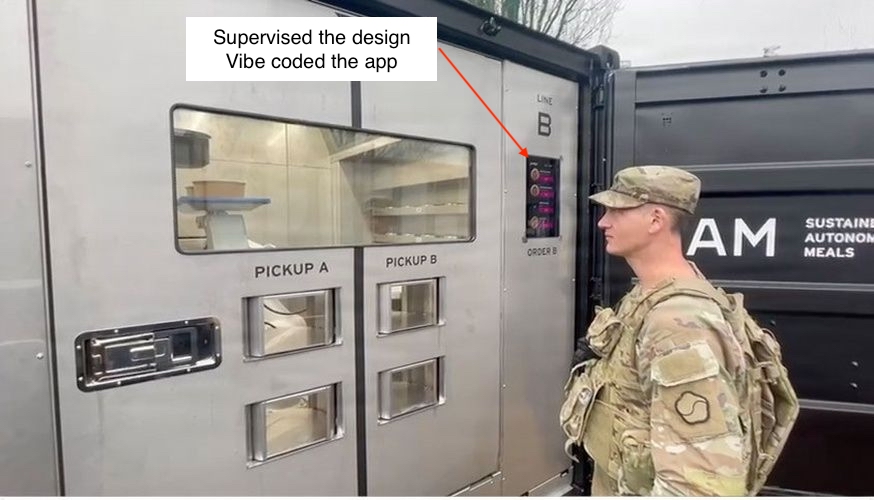
Our outcomes included:
- Packout procedures and deployment workflows
- Ergonomic analysis of operator tasks
- A streamlined and visually engaging ordering interface
As Individual Contributor
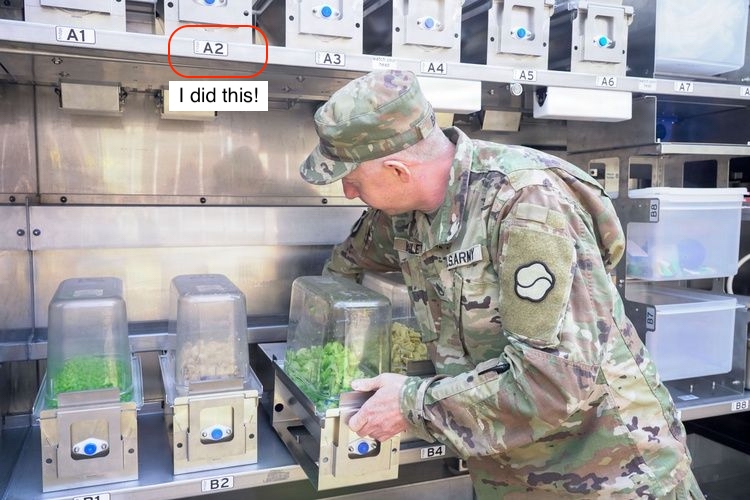
While SAM was entirely a team effort, I also contributed directly in several areas:
- Transformed UI/UX designs into a React app using
vibe coding - Created Linux scripts to set up ordering interface computers
- Reworked the liquid feeding procedure
- Designed a portable weather cover for SAM (needs redesign :/)
- Applied feeder slot labeling system